
Whoa! Seriously? The speed still catches me off guard. I’m telling you, when a block finalizes in under a second, it feels like cheating. At first it was curiosity—then it turned into a habit, and now it’s part of my daily toolkit when I’m tracking tokens, NFTs, or debugging a program. Something felt off about the old block explorers; they were slow, clunky, and rarely gave the full picture—solana changed that, and explorers like solscan made the chain human-readable.
Here’s the thing. Solana moves fast. Really fast. My instinct said “you need a lightweight, fast token tracker” and after poking around, I found one that fits. Initially I thought a generic explorer would do, but then I realized token state and program logs needed a finer lens—so I switched to tools built specifically for Solana, and that made all the difference. Actually, wait—let me rephrase that: not every feature matters equally for every user, though some are non-negotiable if you’re debugging or auditing transactions.
Short answer: solscan helps me see on-chain truth without the fluff. It’s more than a search box and a list of transactions. You can inspect transaction logs, view token mint info, and track holder distributions with charts that don’t lie. Oh, and by the way… the UI rarely gets in the way, which I appreciate—little things like live performance counters and raw instruction decodes save time when you’re under pressure. I’m biased, but interface friction bugs me more than it should.
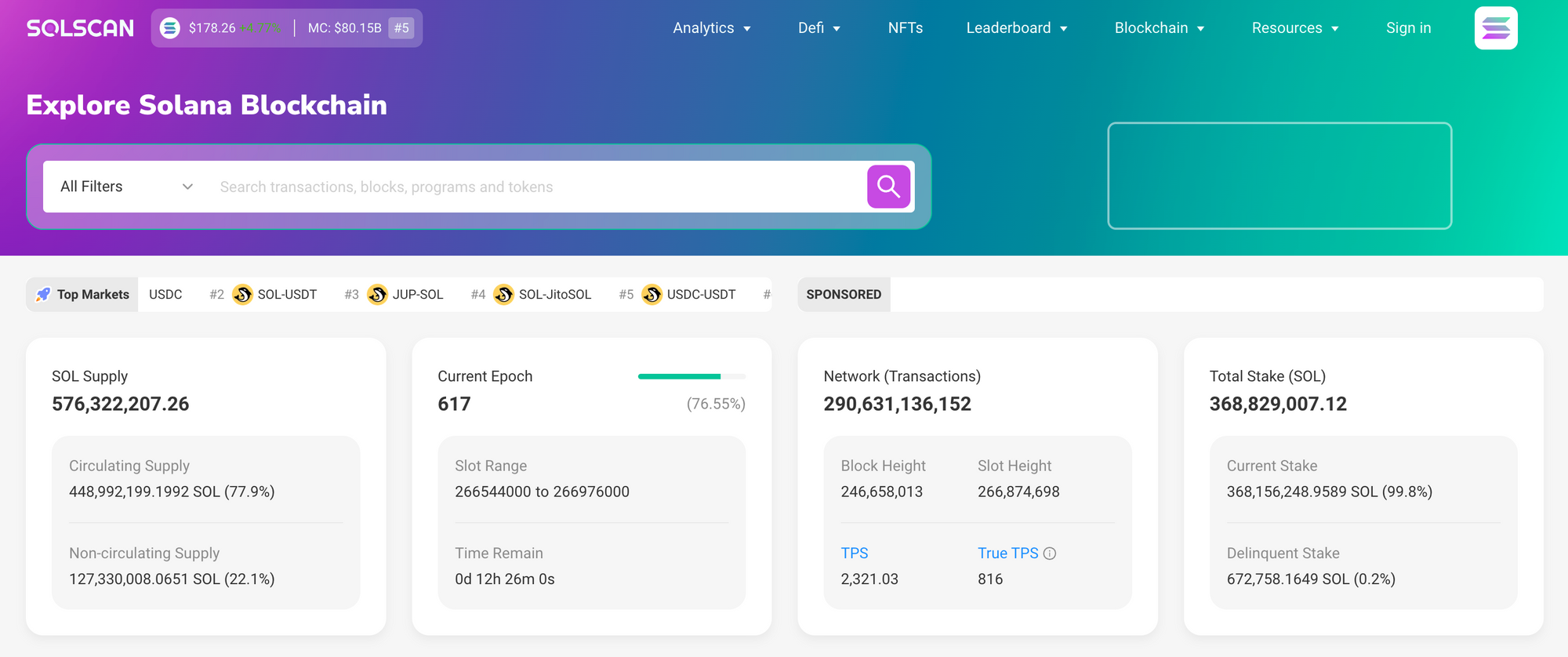
How I Use a Token Tracker Day-to-Day
Okay, so check this out—I usually start by searching for a token mint address. Quick lookup. Then I scan holder concentration, top transfers, and recent instruction history. On one hand that tells me about centralization risks; on the other hand, it surfaces odd activity patterns that deserve a deeper look. When things look weird, I dive into transaction-level logs and decode program instructions to see what actually executed, because high-level summaries can hide the small but important differences that matter for audits.
Hmm… sometimes the top holder is an exchange wallet. That makes risk assessment different. Sometimes a single address holds 70% of supply and that triggers a manual review. The token tracker makes it easy to jump from distribution charts to real transactions, and that quick pivot matters. My workflow often goes token page → holders list → check recent transfers → click into suspicious txs. That chain of actions is compact, and when you do it dozens of times, UI speed and clarity compound into real time savings.
Something else I love: program log decoding. You can read what a smart contract actually did in plain text instead of guessing. It’s not perfect—logs depend on how programs are written—but it’s far better than nothing. On complicated DeFi flows I trace events across several transactions and look for state changes; it’s painstaking sometimes, but necessary if you’re auditing or just trying to understand emergent behavior. These are the moments when a solid explorer stops feeling like a toy and starts feeling like lab equipment.
What Makes a Good Solana Explorer (and Why Solscan Fits)
First, performance. You want an explorer that loads pages instantly and shows live confirmations without hiccups. Next, transparency—you should be able to see raw instructions, decoded logs, and any inner instructions without jumping through hoops. Then, usability—the UI must make it easy to traverse from a wallet to a mint to a transaction. Lastly, tooling: token trackers, NFT viewers, and analytics add real value. On all of these points solscan delivers a pragmatic, focused experience that I trust when I’m researching tokens or triaging incidents.
I’ll be honest: I prefer explorers that don’t try to be everything at once. Some tools pile on charts and marketing noise, and that distracts from core tasks. Solscan strikes a balance, offering both quick token overviews and deep-dive pages when you need them. If you want to explore it, see this: solscan. That single link will get you where most power-users start.
On one hand explorers can be glorified search engines. On the other hand they can enable meaningful analysis, and good ones do both. Though actually, not every feature is used equally—advanced decoding is vital for devs, while holders charts are what community managers look at. The right explorer gives both perspectives without being bloated.
Troubleshooting and Red Flags I Watch For
Watch for sudden spikes in transfers from unknown wallets. That’s usually a red flag. Also check for program upgrades or authority changes on mints; those are governance signals that matter. If logs show repeated failed instructions or excessive compute usage, that could indicate bugs or even exploits in progress. I sometimes find patterns that look like automated snipes or bot activity; seeing timing across multiple transactions helps confirm those suspicions. It’s tedious work sometimes, but catching a problem early can save tens of thousands—or more.
Something felt off about one token launch I watched; the token’s supply was minted across multiple addresses in quick succession. Initially I thought it was normal onboarding. Then I traced the addresses and found coordinated transfers to a small set of custodial wallets. That pattern changed my risk assessment immediately. Patterns like that are easier to spot with a token tracker that surfaces holder charts and transfer timelines side-by-side.
Common Questions
Can I verify a transaction without trusting the explorer?
Yes. A good explorer lets you inspect the raw transaction bytes and decoded logs so you can independently verify state changes. Always cross-check with RPC nodes if you need cryptographic certainty.
Is token holder data reliable?
Generally yes, but with caveats. Holder snapshots are accurate at the time of the block shown; however, custody arrangements and wrapped tokens can complicate interpretation. Use multiple signals—on-chain transfers, mint authority changes, and program logs—for a fuller picture.
How do I spot a rug or scam quickly?
Look for concentration in holder charts, rapid transfers to exchanges, suspicious program authority changes, and odd instruction patterns. No single sign is conclusive, but several together raise the alarm.